
Ulf Hundeiker reviewed Der Meister und Margarita by Mikhail Bulgakov
Eine recht seltsame Geschichte.... 😁
4.0 stars
.
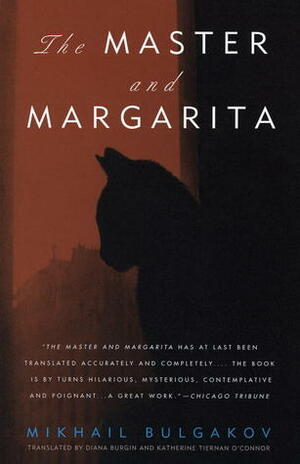
The first complete, annotated English Translation of Mikhail Bulgakov's comic masterpiece.
An audacious revision of the stories of Faust and Pontius Pilate, The Master and Margarita is recognized as one of the essential classics of modern Russian literature. The novel's vision of Soviet life in the 1930s is so ferociously accurate that it could not be published during its author's lifetime and appeared only in a censored edition in the 1960s. Its truths are so enduring that its language has become part of the common Russian speech.
One …
The first complete, annotated English Translation of Mikhail Bulgakov's comic masterpiece.
An audacious revision of the stories of Faust and Pontius Pilate, The Master and Margarita is recognized as one of the essential classics of modern Russian literature. The novel's vision of Soviet life in the 1930s is so ferociously accurate that it could not be published during its author's lifetime and appeared only in a censored edition in the 1960s. Its truths are so enduring that its language has become part of the common Russian speech.
One hot spring, the devil arrives in Moscow, accompanied by a retinue that includes a beautiful naked witch and an immense talking black cat with a fondness for chess and vodka. The visitors quickly wreak havoc in a city that refuses to believe in either God or Satan. But they also bring peace to two unhappy Muscovites: one is the Master, a writer pilloried for daring to write a novel about Christ and Pontius Pilate; the other is Margarita, who loves the Master so deeply that she is willing literally to go to hell for him. What ensues is a novel of in exhaustible energy, humor, and philosophical depth, a work whose nuances emerge for the first time in Diana Burgin's and Katherine Tiernan O'Connor's splendid English version. (back cover)
Paperback, 373 pages
English language
Published March 27, 1996 by Vintage International.
.
Oikein vetävästi ja hilpeästi alkava kirja, joka kuitenkin pian rupeaa käymään hiukan puuduttavaksi. Joka tapauksessa kirja on sen verran kuuluisa, etten oikein tiedä, mitä odotin, mutta tapahtumat ja tyyli olivat lopulta jotain sellaista, mitä en ainakaan osannut odottaa. Saatana apureineen saa moskovalaiset lähinnä hölmöilemään itsekseen ja tekemään toisilleen pikkumaisia jäyniä ja kostoja, ei ryhtymään mihinkään todelliseen pahuuteen. Kiinnostavana lisänä tässä painoksessa on kursiivilla merkitty kohdat, joita Neuvostoliitossa julkaistussa painoksessa ei ole ollut, ja siitä voi yrittää miettiä, millaisia detaljeja siellä on sensuroitu. Jostain syystä esimerkiksi hymyily niin, että hampaat näkyvät, on päätynyt säännönmukaisesti sensuurin kouriin.