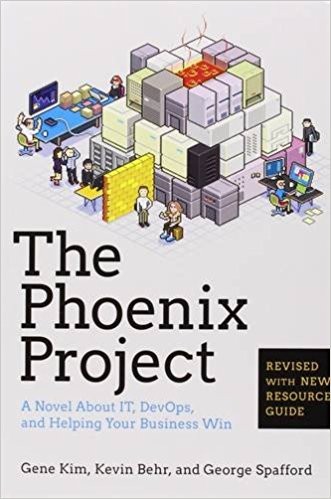
Bill is an IT manager at Parts Unlimited. It's Tuesday morning and on his drive into the office, Bill gets a call from the CEO.
The company's new IT initiative, code named Phoenix Project, is critical to the future of Parts Unlimited, but the project is massively over budget and very late. The CEO wants Bill to report directly to him and fix the mess in ninety days or else Bill's entire department will be outsourced.
With the help of a prospective board member and his mysterious philosophy of The …
Bill is an IT manager at Parts Unlimited. It's Tuesday morning and on his drive into the office, Bill gets a call from the CEO.
The company's new IT initiative, code named Phoenix Project, is critical to the future of Parts Unlimited, but the project is massively over budget and very late. The CEO wants Bill to report directly to him and fix the mess in ninety days or else Bill's entire department will be outsourced.
With the help of a prospective board member and his mysterious philosophy of The Three Ways, Bill starts to see that IT work has more in common with manufacturing plant work than he ever imagined. With the clock ticking, Bill must organize work flow streamline interdepartmental communications, and effectively serve the other business functions at Parts Unlimited.
In a fast-paced and entertaining style, three luminaries of the DevOps movement deliver a story that anyone who works in IT will recognize. Readers will not only learn how to improve their own IT organizations, they'll never view IT the same way again.
It’s a good way to introduce business and DevOps concepts to folks new to them from either direction. My biggest complaint is that in service of that mission, the storytelling plays out somewhere between a bad case of “plot armor” and “wish fulfillment”.
I don’t work in IT. I’m a data person leading a team at a large national political organization. But I was unloading all my problems (misunderstanding of data among org leaders, too many meetings, too much work, technical debt) to a technical mental of mine who insisted I pick up The Phoenix Project. While reading this book, I actively had to translate the IT jargon into something more relatable for my reference frame. Yet despite having no knowledge of IT or “DevOps” this book was a wealth of knowledge with tangible insights that I could take back to my team. I had many moments empathizing with Bill as he recovered from one crisis to another and battled various business and external challenges as well as “a-ha” moments as Bill learned to navigate his hectic workplace. Some of the books takeaways aren’t useful to me. Some I already knew. But if …
I don’t work in IT. I’m a data person leading a team at a large national political organization. But I was unloading all my problems (misunderstanding of data among org leaders, too many meetings, too much work, technical debt) to a technical mental of mine who insisted I pick up The Phoenix Project. While reading this book, I actively had to translate the IT jargon into something more relatable for my reference frame. Yet despite having no knowledge of IT or “DevOps” this book was a wealth of knowledge with tangible insights that I could take back to my team. I had many moments empathizing with Bill as he recovered from one crisis to another and battled various business and external challenges as well as “a-ha” moments as Bill learned to navigate his hectic workplace. Some of the books takeaways aren’t useful to me. Some I already knew. But if anything I felt seen — knowing that others deal with what I deal with, across industries, was enough for me
A good (though old) message wrapped in a bad novel
2.0 stars
As a novel, this is as bad as it gets. The dialog is awful, the plot is nonsensical, and the characters are like bizarre cardboard cutouts; totally one-dimensional, yet totally unrealistic.
The message that the book is trying to get across may have been more impactful in 2013, but it feels like ancient history now in 2023. There are better books about DevOps that don't spend hundreds of pages telling a hokey story about why it's important.