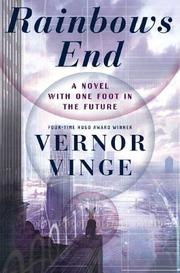

ilk@bookrastinating.com reviewed Rainbows End by Vernor Vinge
Rainbows End
2.0 stars
This is a quasi-DNF, because I've got the last fifth of the novel to go but it's starting to drag, and the protagonist is worthless. It has the feeling of something quickly edited and put to market (perhaps the author needed to fufil a contractual requirement?). Who knows, it's ancient history now.
It's main point of interest is Vinge's take on the proliferation of augmented reality and mesh network technology, and sadly I find his observations pretty plausible - namely that the infrastructure becomes a theatre of war for state actors, which leads to network balkanization and the subordination of all private ownership of technology to the demands of state (the novel has a tinkerer character who has managed to assemble a PC whose CPU isn't 'in thrall' to the Department of Homeland Security). It's sobering to compare the world in the novel to our current-day situation of nation-states …
This is a quasi-DNF, because I've got the last fifth of the novel to go but it's starting to drag, and the protagonist is worthless. It has the feeling of something quickly edited and put to market (perhaps the author needed to fufil a contractual requirement?). Who knows, it's ancient history now.
It's main point of interest is Vinge's take on the proliferation of augmented reality and mesh network technology, and sadly I find his observations pretty plausible - namely that the infrastructure becomes a theatre of war for state actors, which leads to network balkanization and the subordination of all private ownership of technology to the demands of state (the novel has a tinkerer character who has managed to assemble a PC whose CPU isn't 'in thrall' to the Department of Homeland Security). It's sobering to compare the world in the novel to our current-day situation of nation-states hoarding (and protecting) software vulnerabilities for exploitation, zero-click malware vendors like Pegasus, automated-decision defense systems, etc.