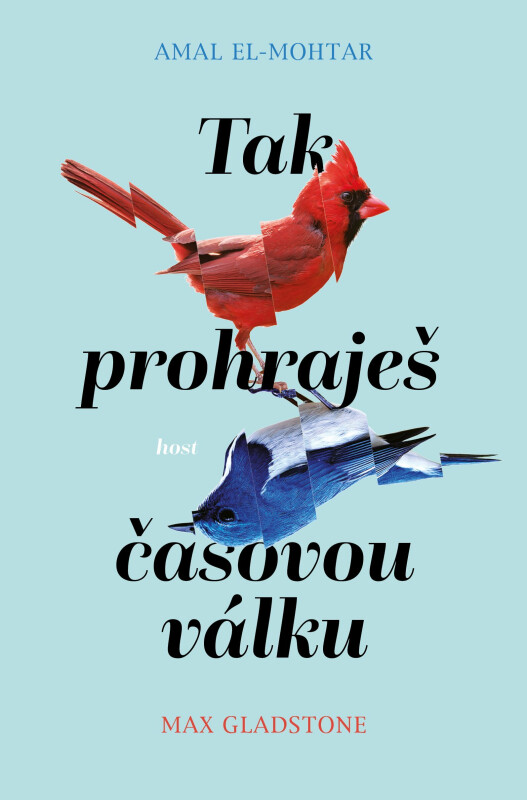
mahdi reviewed Tak prohraješ časovou válku by Amal El-Mohtar
.
Zvlastni knizka, jak formou tak i obsahem.
Dam tomu nakej cas at muze jeste pusobit.
Originální sci-fi román v dopisech. Může korespondence mezi nepřáteli přerůst v něco hlubšího?
Agentura a Zahrada, dvě mocné říše, spolu celé věky vedou nelítostnou válku. Jejich agentky cestují časem a přetvářejí vlákna dějin. I ten nejnepatrnější zásah může změnit osud celých civilizací nebo vytvořit novou alternativní realitu.
Když uprostřed trosek skomírajícího světa najde agentka dopis od své protivnice se vzkazem „Před přečtením spal“, považuje ho za žert, nastraženou past. Navzdory všem pravidlům však odepíše.
Korespondence, která byla míněna jako výsměch sokyni, se postupně mění v něco jiného. …
Originální sci-fi román v dopisech. Může korespondence mezi nepřáteli přerůst v něco hlubšího?
Agentura a Zahrada, dvě mocné říše, spolu celé věky vedou nelítostnou válku. Jejich agentky cestují časem a přetvářejí vlákna dějin. I ten nejnepatrnější zásah může změnit osud celých civilizací nebo vytvořit novou alternativní realitu.
Když uprostřed trosek skomírajícího světa najde agentka dopis od své protivnice se vzkazem „Před přečtením spal“, považuje ho za žert, nastraženou past. Navzdory všem pravidlům však odepíše.
Korespondence, která byla míněna jako výsměch sokyni, se postupně mění v něco jiného. V něco, co by mohlo ovlivnit minulost i budoucnost. Začíná sled soubojů, pronásledování a setkání uprostřed světů plných bitev a fantaskních proměn.
Odhalení vztahu mezi agentkami by pro obě znamenalo zkázu. Agentura i Zahrada touží zvítězit a nemilosrdně odstraní kohokoli, kdo by je mohl kompromitovat a ohrozit tak jejich cíl.
Hardcover, 224 pages
Czech language
Published May 16, 2025 by Host.
Zvlastni knizka, jak formou tak i obsahem.
Dam tomu nakej cas at muze jeste pusobit.
1) You should appreciate romance
2) Careful reading is mandatory
5 Stars bc it felt very unique to me, like some other bookwyrm wrote: artsy in an SF setting.
Oh, this book is so fun! It doesn’t take itself too seriously, which makes the unseriousness of it easier to take for this reader. <spoiler>And women who are in love but also kill each other — my favorite ❤️💙</spoiler>
Very enjoyable, quite romantic (even if I'm not that big of a fan of the enemies to lovers trope) and tells us a very important lesson: you win the time war by not writing about paradoxes, meeting your grandparents or much of the details of time travel in general.
Even in the flaws it grows stronger. This is a book that is going to stay with me for a long, long time.
Amal El-Mothar and Max Gladsonte's "This is How You Lose the Time War" follows two agents, Red and Blue, on opposite sides of a war that spans all of time and (some of?) space across multiple universes.
Each chapter starts with a snapshot of what each agent is doing to advance their side's cause, whether that's taking part in major historical events or planting the seeds for 'coincidences' in the future, and ends with the discovery of a letter from their counterpart. What begins as acknowledgements of respect, nods across the battlefield, gradually grow into something more.
Fans of science fiction may be disappointed by the lack of focus on the time-traveling, universe-hopping backdrop to this story of star-crossing lovers. Details are sparse, and little is disclosed about the factions or why they are at war other than hints and impressions throughout the book.
The gradual, tip-toeing …
Amal El-Mothar and Max Gladsonte's "This is How You Lose the Time War" follows two agents, Red and Blue, on opposite sides of a war that spans all of time and (some of?) space across multiple universes.
Each chapter starts with a snapshot of what each agent is doing to advance their side's cause, whether that's taking part in major historical events or planting the seeds for 'coincidences' in the future, and ends with the discovery of a letter from their counterpart. What begins as acknowledgements of respect, nods across the battlefield, gradually grow into something more.
Fans of science fiction may be disappointed by the lack of focus on the time-traveling, universe-hopping backdrop to this story of star-crossing lovers. Details are sparse, and little is disclosed about the factions or why they are at war other than hints and impressions throughout the book.
The gradual, tip-toeing romance between Red and Blue via their elegantly composed letters is the strength of this book. There is a sweetness as the characters, hovering just beyond what one might call "human", discover that they are capable of such love, and for who should be their mortal enemy, no less. Readers who never tire of "Romeo and Juliette" will find much to love in "This is How You Lose the Time War".
If you like books where you don't get all the answers, that aren't necessarily linear, and are more about prose and gut-wrenching heartache, you'll enjoy this book. It's art. If you don't like artsy books, you probably should pick something else to read.
I loved it.
I could not stop listening. This book is SO good. Intricate and lovely. Prose this delicious is rarely written.
"This is How You Lose the Time War" asks the reader to perch on the shoulders of two operatives on opposing sides of a time-traveling war.
Each chapter follows "Red" or "Blue" as they scurry up and down timelines and across dimensions. The book is both sweepingly broad and extremely contained and personal.
The settings flit by, dizzying: a temple for mechanized humans, an ancient holy cave, the assassination of Caesar - each sketched with broad, emotional strokes to give the setting an aesthetic. One gets the sense that a great web of cause and effect is being constantly constructed, altered, and destroyed, without ever seeing the full picture.
Against these backdrops, the characters "Red" and "Blue" write to each other - as nemeses, then as friends, ever deeper entangled even as they demolish each other's plans and forces. The letters make up an enormous part of …
"This is How You Lose the Time War" asks the reader to perch on the shoulders of two operatives on opposing sides of a time-traveling war.
Each chapter follows "Red" or "Blue" as they scurry up and down timelines and across dimensions. The book is both sweepingly broad and extremely contained and personal.
The settings flit by, dizzying: a temple for mechanized humans, an ancient holy cave, the assassination of Caesar - each sketched with broad, emotional strokes to give the setting an aesthetic. One gets the sense that a great web of cause and effect is being constantly constructed, altered, and destroyed, without ever seeing the full picture.
Against these backdrops, the characters "Red" and "Blue" write to each other - as nemeses, then as friends, ever deeper entangled even as they demolish each other's plans and forces. The letters make up an enormous part of the experience, and they are comic, intimate... poignant. I didn't give a damn about the war - I just wanted these two characters to be alright.
I loved it. I stayed up past midnight every day I was reading, which wasn't long because I had to see what came next and kept reading.
How do you have a love story between two beings separated by war, time and dimensions? With covert letters. They may be written in seeds or lava flows, but letters nevertheless.
I love this book so much. Just gorgeous in execution, and a story delightful in its telling.
The letters that make up about half of this book are gorgeously written, and I love the story they tell. The basic idea of the time war is clever, and the descriptions of placetimes the characters find themselves in evocative, sometimes reminiscent of Calvino's Invisible Cities. I devoured this book in a few days.
And yet... something about it felt a little thin or hollow behind its fireworks. I think it was a good artistic choice to leave all technical details out, but I couldn't help but get hung up on the time paradoxes. Not that it's the authors' responsibility to necessarily avoid or solve them, but for me personally they intruded on the suspension of disbelief.
Hauntingly beautiful. A love-letter to the written word.
Really loved this book. Its beautifully written. At times it felt like the writing was a bit heady and I struggled to actually understand what was happening, but thats my only complaint.
it's a magical realist (?) romance in a science fiction Time War setting, an unusual choice, but one that works well, given how strange the consequences of warping causality would be. If you can get ahold of the audio book, it's pretty good, has different readers for Blue and Red.